Particle Theory
Theatre as Interface
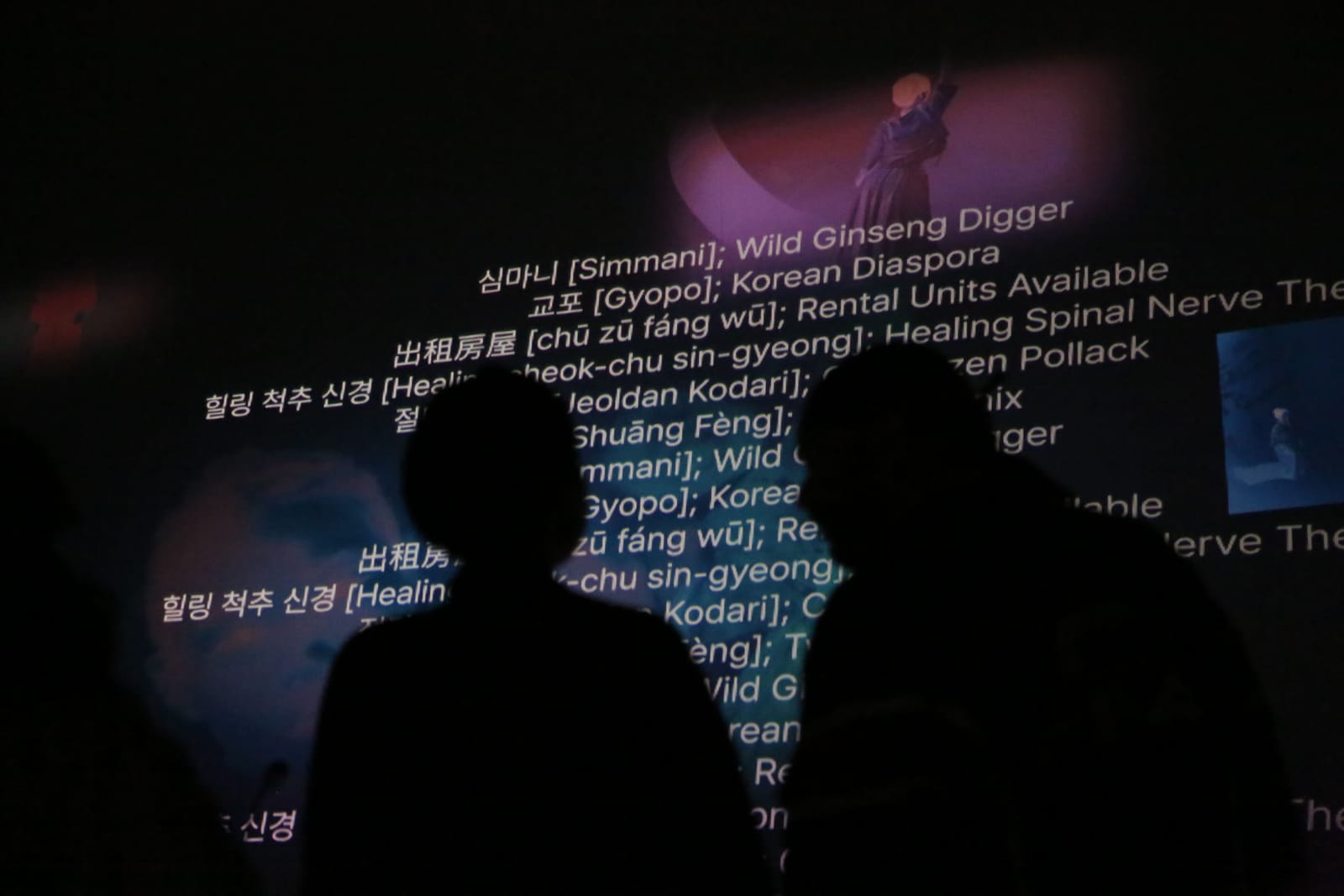
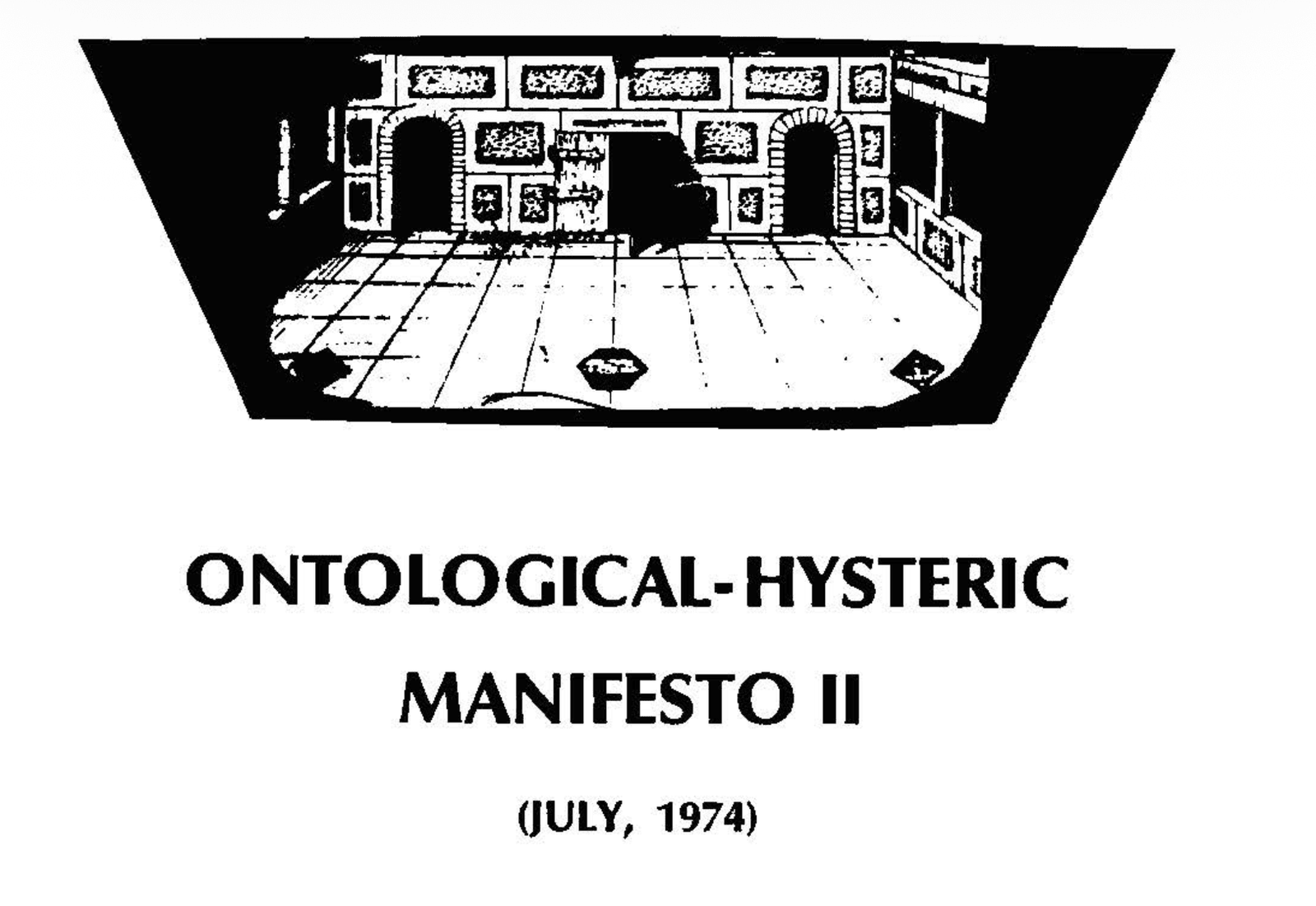
Particle Theory is an experimental theatre piece grounded in Richard Foreman’s unpublished script of the same title (1973). It stages the performance environment as a 3D software viewport — a cognitive interface — asking what it means to perform and to watch inside a world governed by the logic of a rendering machine.
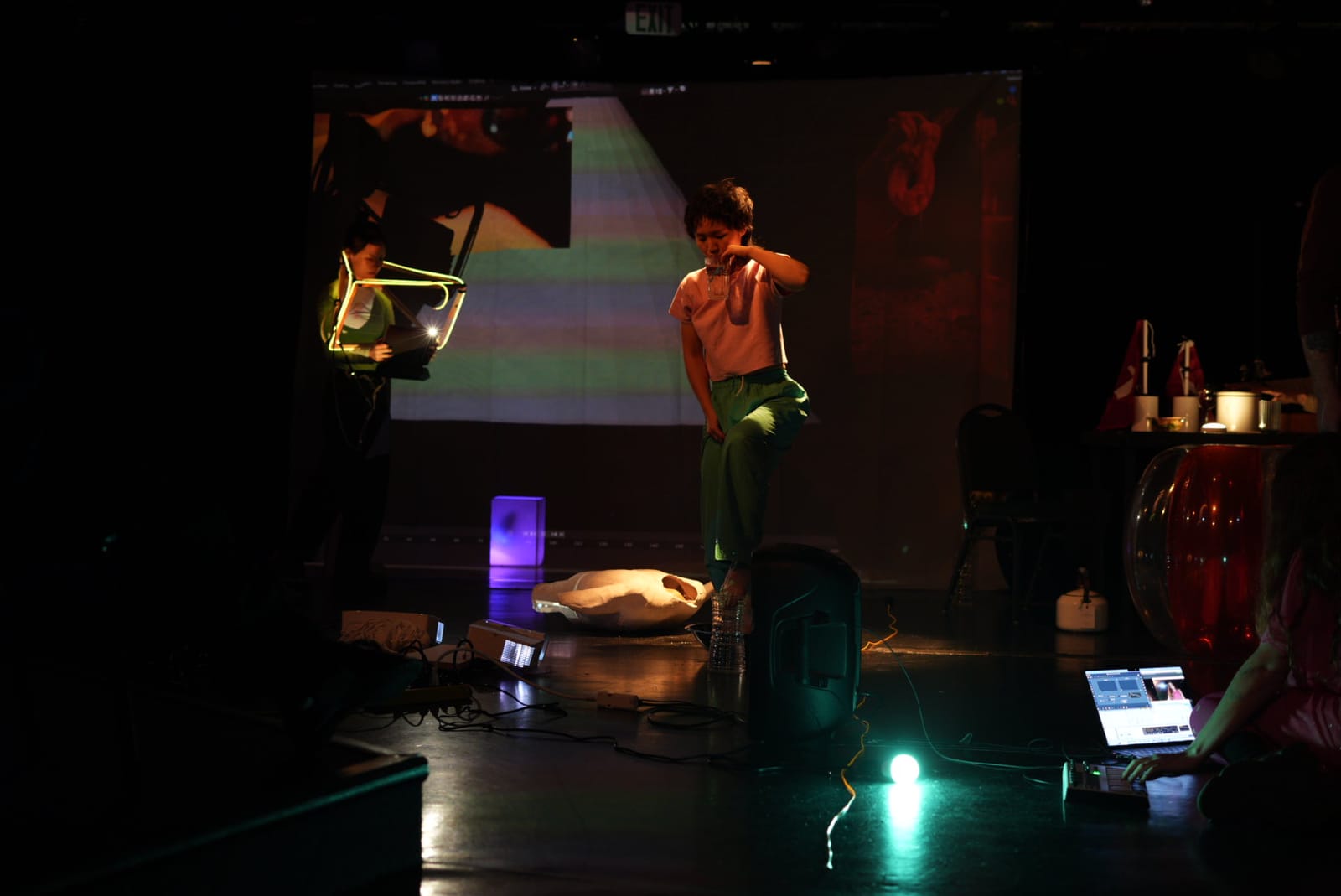
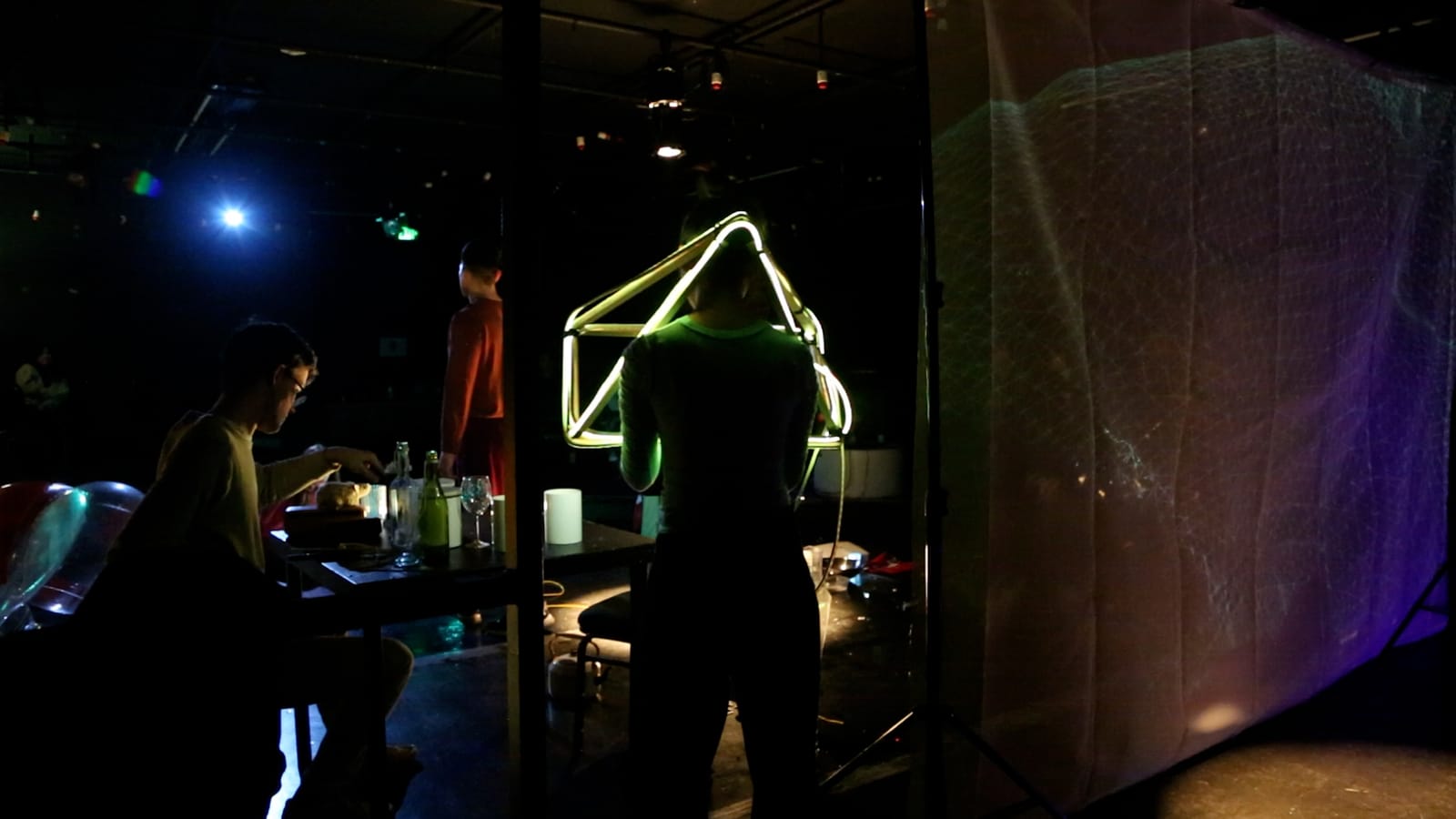
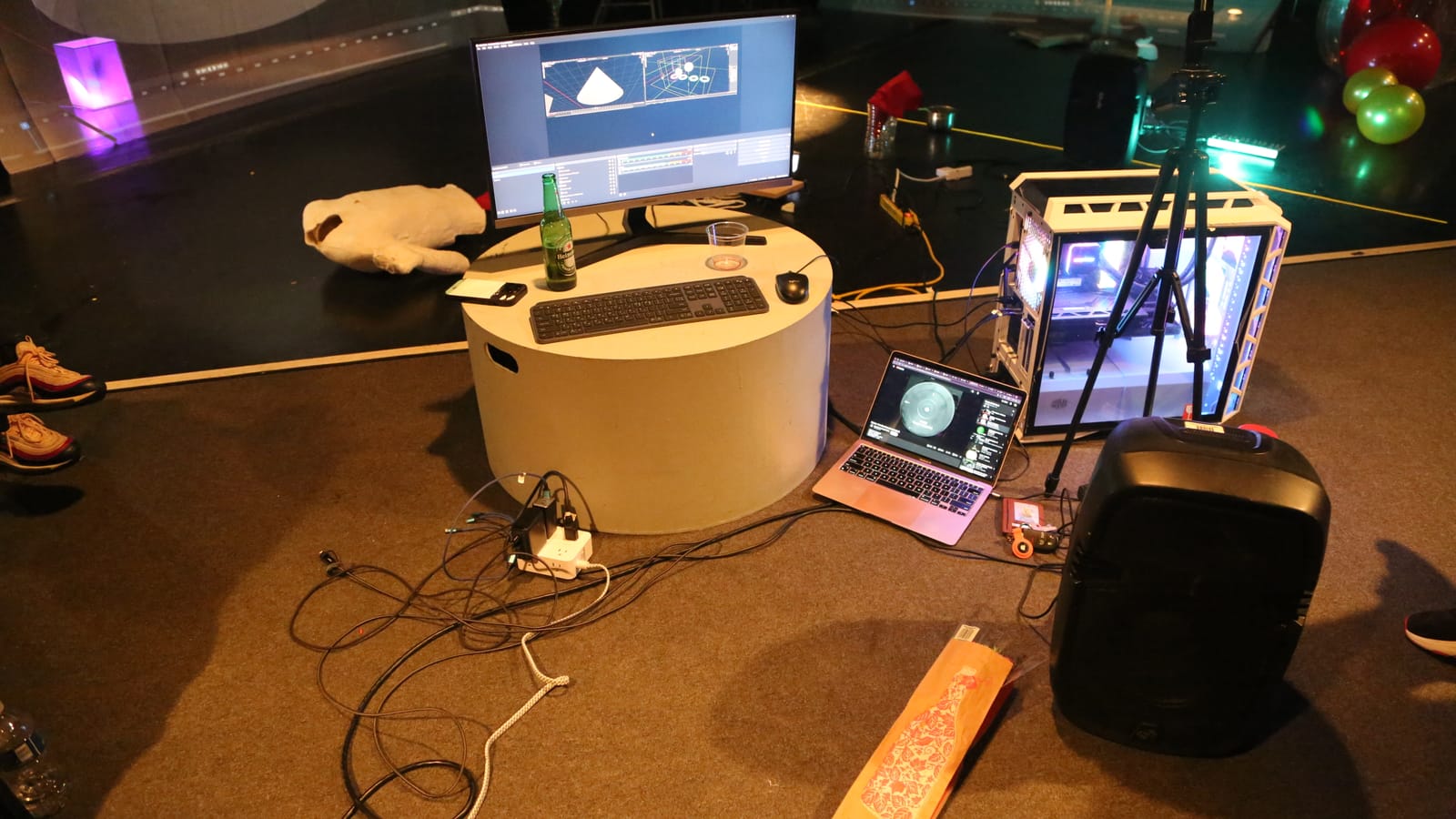
The stage is a physical instantiation of a DCC (digital content creation) environment. Props — axial line lighting cables, a UI-shaped live camera, primitive shapes (large balls, cubes) — sit alongside monitors and projection surfaces displaying CGI simulations — particle systems, fluid dynamics, physics collisions. The audience enters a scene file. Everything on stage is an element with a material, a logic, a rendering state.
Concept
We increasingly perceive the world through the lens of rendering machines. Flowing fluid splashes in shampoo commercials and crystal-clear luxury car renderings do not simply depict reality; through their verisimilitude and seamlessness, they begin to replace what we see. Vision is now outsourced to the rendering viewport.
Theatre, through its spatial dimensionality and its commitment to the ‘as-if’, holds the potential to reveal and destabilize a normalized way of seeing.
Inspired by Richard Foreman's acausal structures — dedicated to liberating consciousness, this project constructs a space in which audiences become actively aware of their own watchfulness. By repeatedly betraying the trust placed in rendered media and the performance interrupts the frictionless perception.
Score
The score is driven by pre-recorded playback of Foreman’s alogical text, which triggers each performer’s response. Each performer embodies a distinct elemental role as part of a system.
Yun Lee (MFA Choreography) is the Mover. She responds to the text through physical tasks, looping, glitching, interacting with objects. For example, when the line “I need something helping my muscles” repeats, she moves between four bowls of water — placing hands and feet in each, drinking through a straw — the actions prompted and devised from the original script.
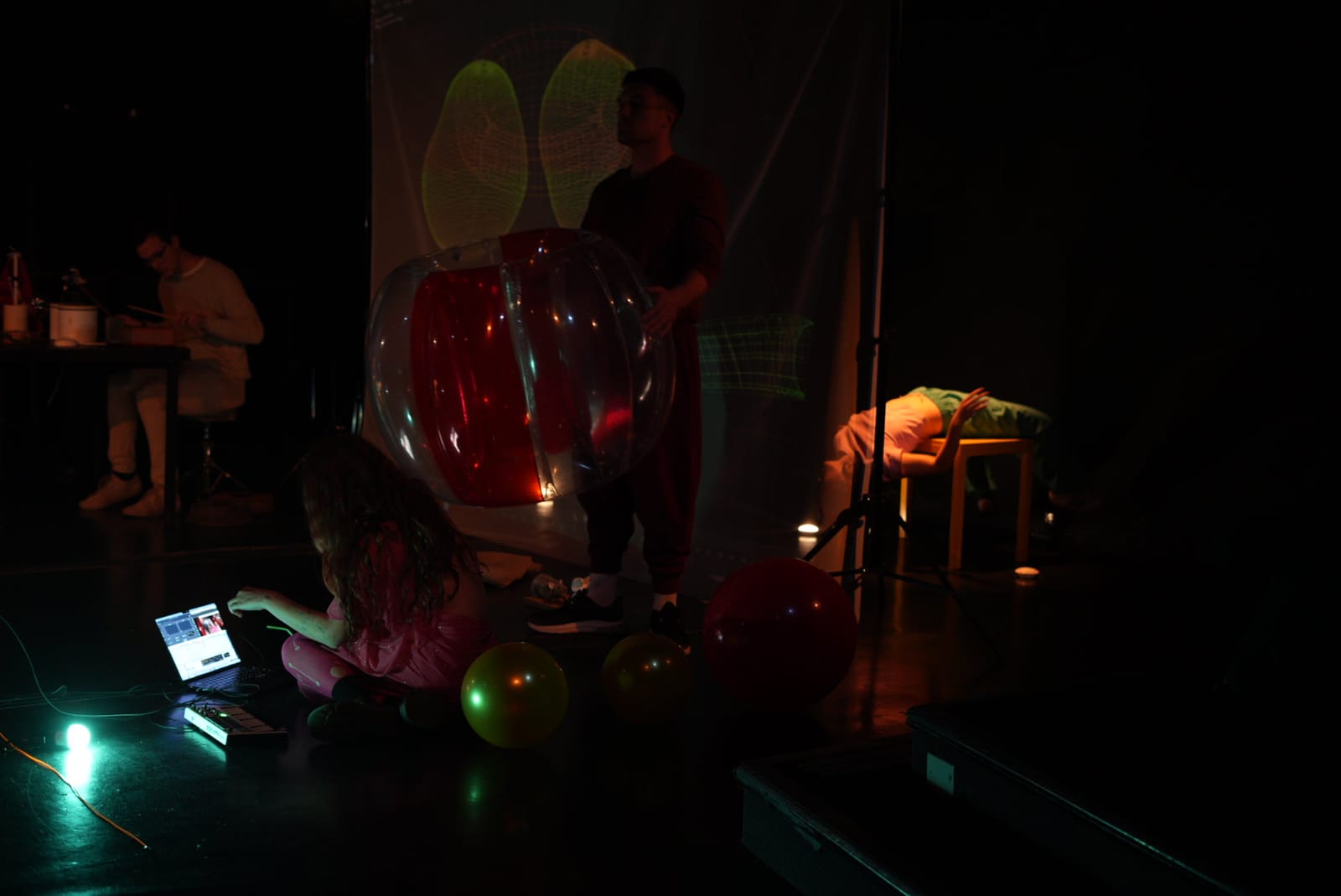
Grant Johnson (MFA Performer-Composer) is the Object-Sound Maker. His collisions with physical materials — bottles, cylinders, surfaces — produce the acoustic layer, following the logic of rigid-body physics.
Sylvia Celes (MFA Performer-Composer) generates the electronic layer through a hand-tracking audio system. Her gestures, captured in real-time, simultaneously modulate synthesized sound and drive computer graphics simulations across the screens.
Russ Cho (MFA Photography) operates as the literal camera of the world. She carries a physical mockup of a camera interface with an attached camcorder, she moves through the space, framing and capturing the other performers. Her camera feed appears on the screens, presenting the audience with a UI point of view.
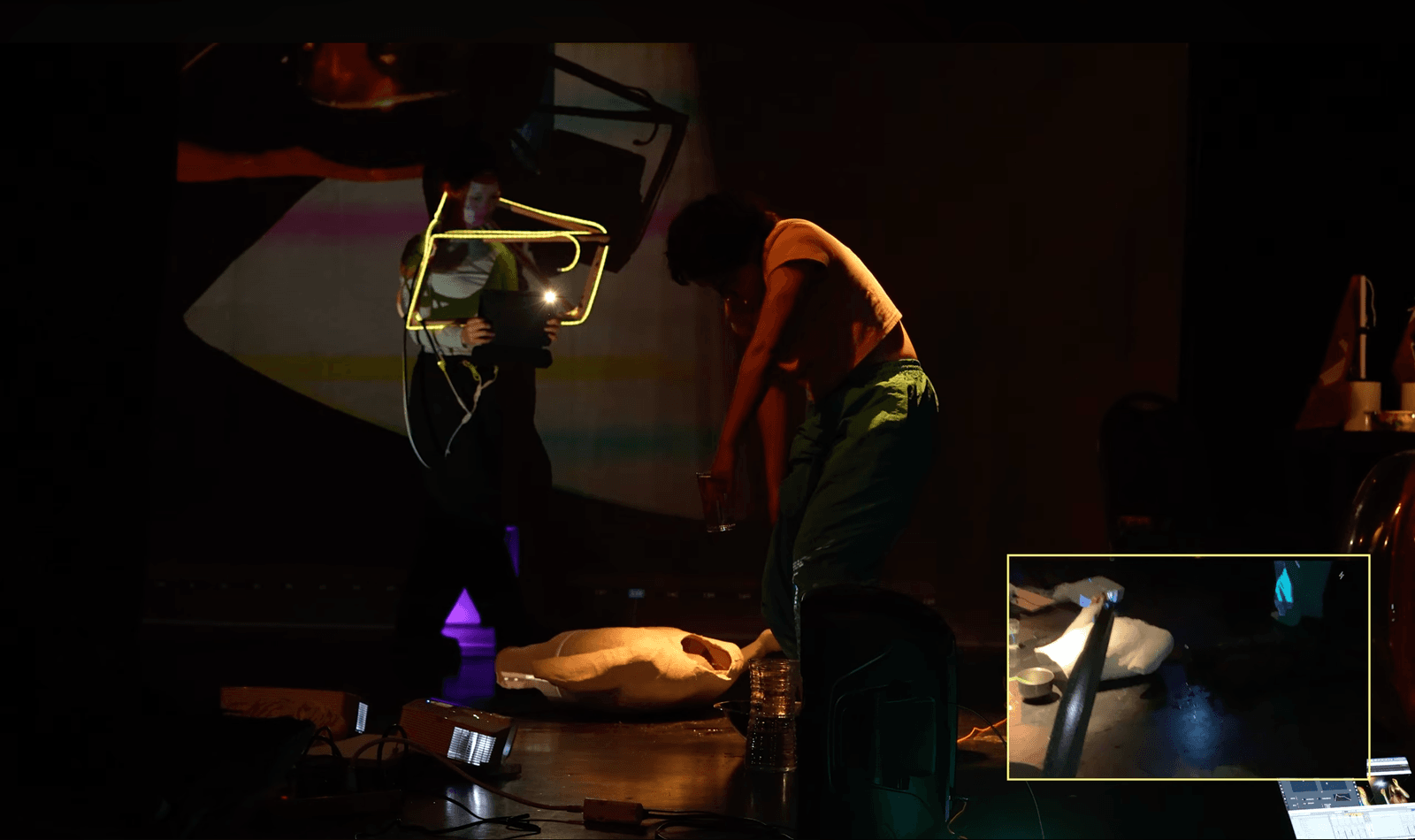
Arthur Valdez (BFA Acting) is triggered by his own recorded voice. He follows a set of rules established during rehearsal — repeating after the voice, startling and recoiling, carrying water, leaping like a rabbit. The direction for this performance was less acting than codification.
Offstage, lighting designer Tilda Seo (BFA Lighting Design) responds to the performers not with emotional human timing, but with its own internal logic, revealing their systemic but psychological presence.
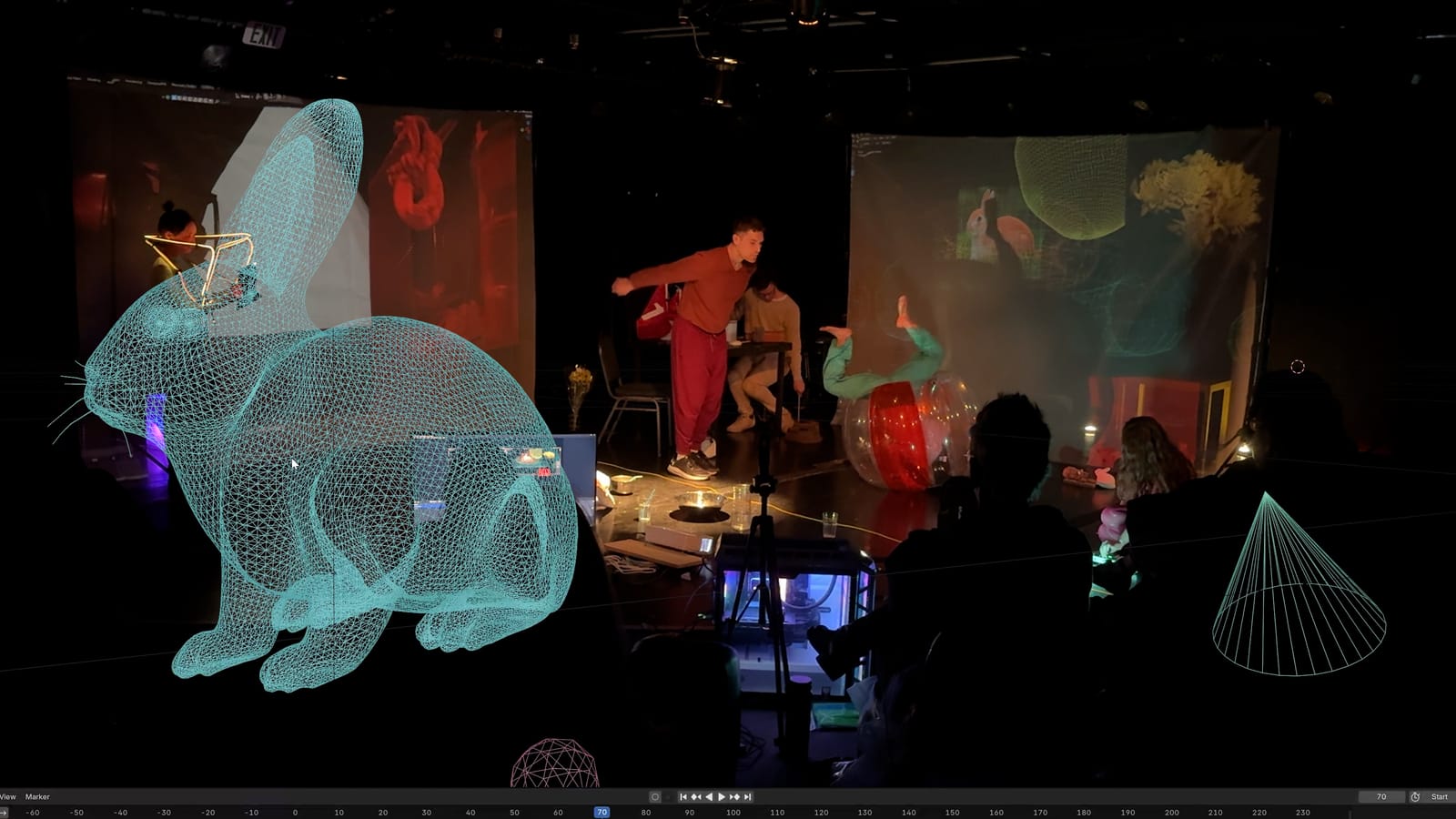
Hera Kang (MFA Interactive Media for Performance) operates as the user, her desktop positioned at the center of the audience seating — triggering and transforming the visual environment from within the crowd, the hand controlling the viewport.
The dramaturgical structure is acausal. Scenes collide rather than develop. There is no narrative arc. What accumulates is perceptual disorientation — a growing awareness of one’s own act of watching, and the conditions under which that watching has been trained. The audience will likely feel simultaneously inside and outside the work.
As digital graphics become the dominant mode of communication, rendered imagery increasingly becomes the benchmark for how reality is presented — and perceived. Particle Theory is not resistance against technology, nor a surrealist dismantling of images. It proposes a way of breaking perception into smaller units. Slowing down the act of seeing, sharpening sensitivity toward how we see. A shift from looking through images to looking at them. In an era where vision is increasingly outsourced to the rendering engine, the stage may be one of the few remaining spaces where we can briefly notice.
Particle Theory is co-created across CalArts alumni — Theater, Dance, Music. Script supported by the NYU Special Collection Center, special thanks to Michael Darling and Charles McNulty for guidance.
Development
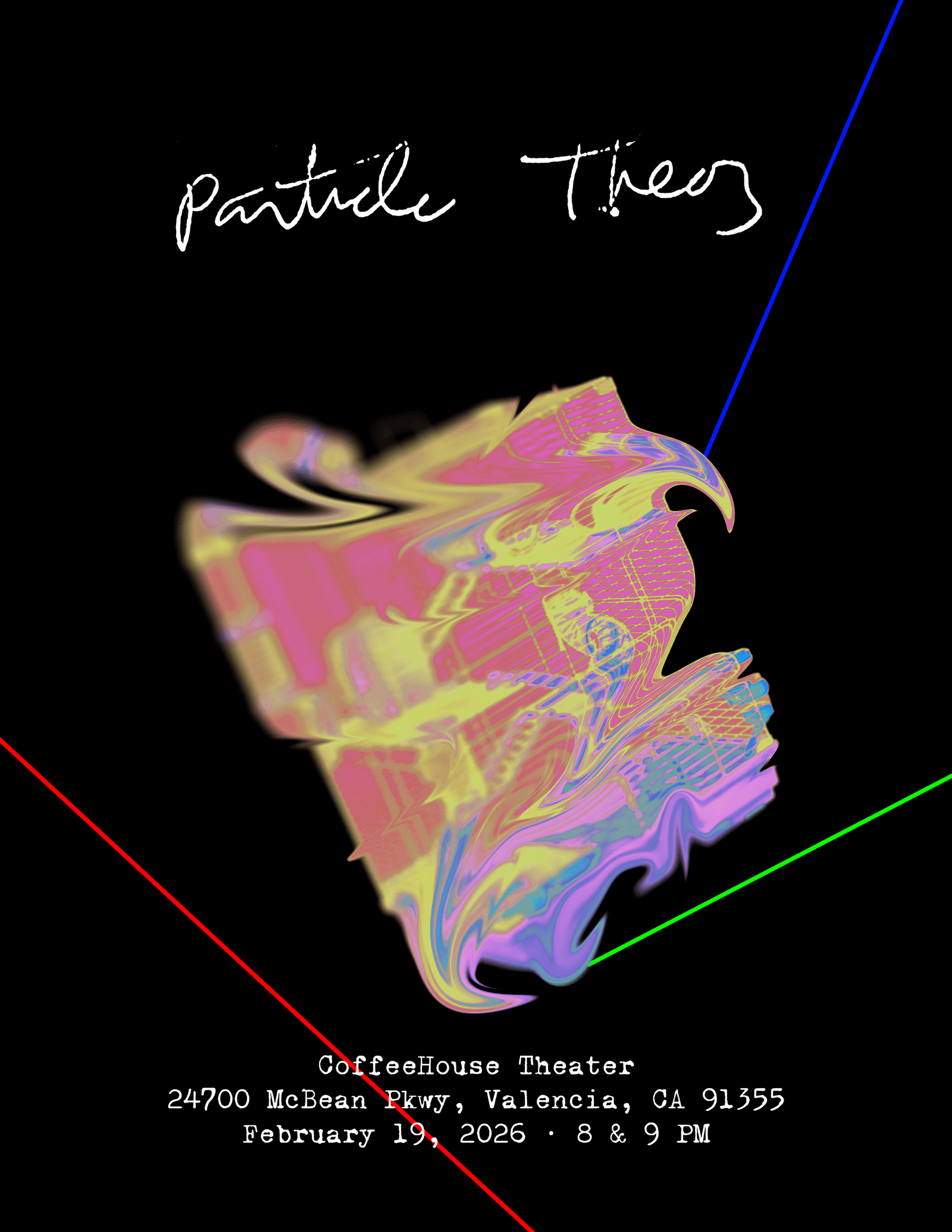
Particle Theory has completed its first prototype performance as a WIP presentation at California Institute of the Arts' CoffeeHouse Theater, where about fifty audience members experienced the work. Drawing from audience responses, critical feedback, and the performers' deepened understanding of their roles, we will develop the project to an audience-ready state through dramaturgical development and technical expansion.
Open to Collaboration!
If you are a curator, producer, or collaborator interested in this work, we would love to hear from you!